Case Study
Medicare AI
About the project
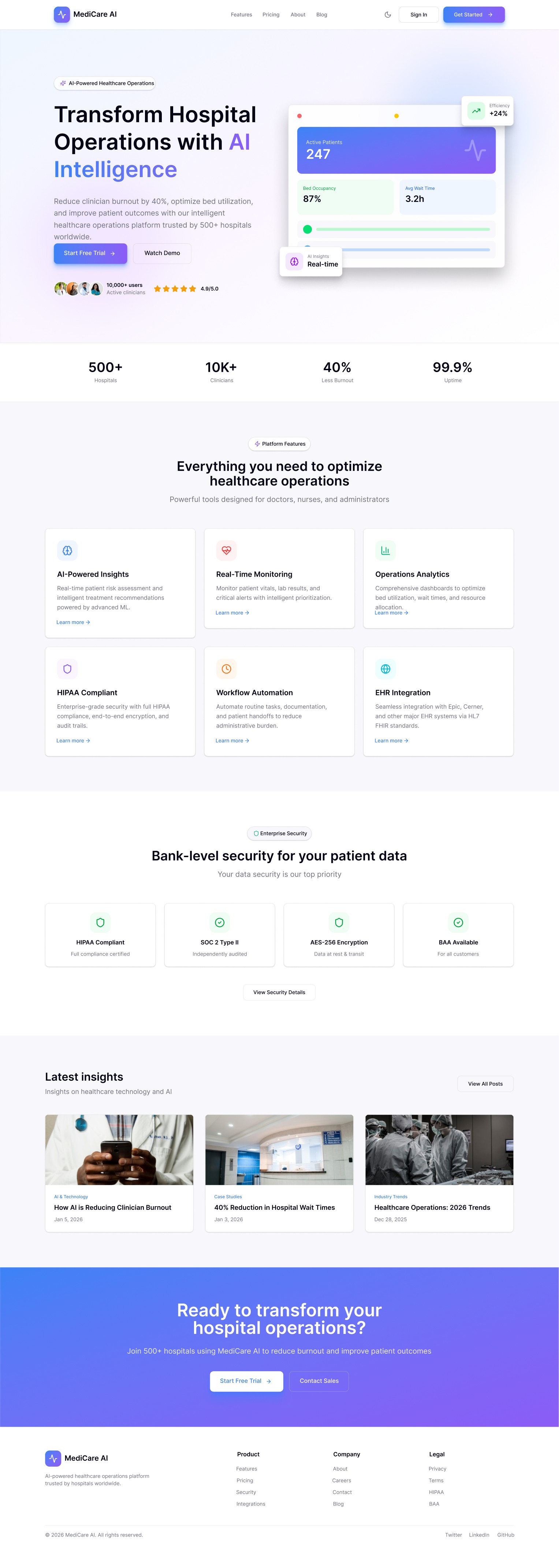
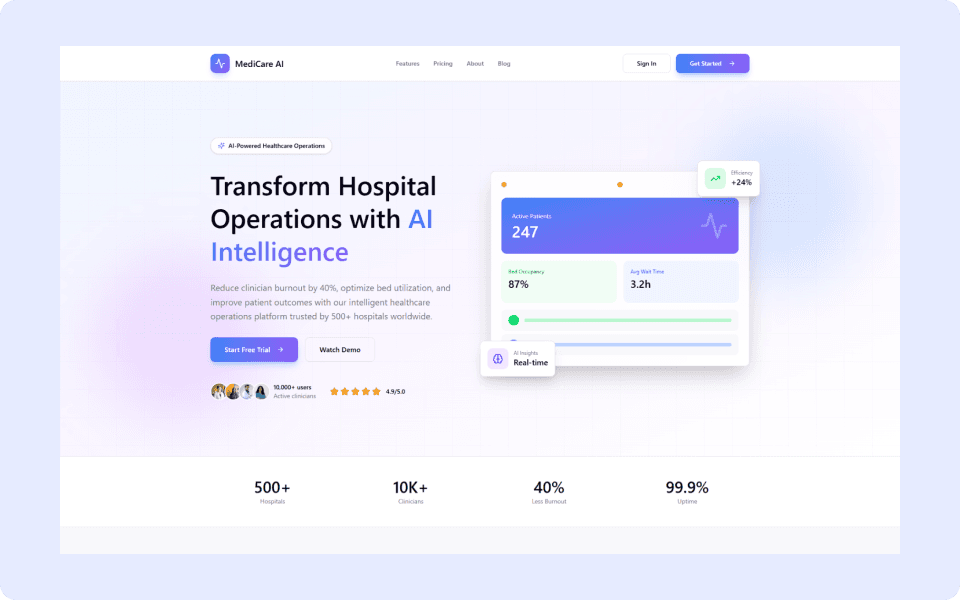
A comprehensive mobile-first UX/UI design for Healthcare Organisation, A B2B healthcare platform that simplifies clinical workflows, documentation, and decision-making so doctors can spend more time with patients not screens.
My role:
UI/UX Design, Research, User Testing, Usability Testing, Accesibility, Wireframing, Prototyping, Visual Design, Design System, User-Centered Design, Figma
Timeframe:
2 months
Project Overview
Healthcare systems worldwide are facing a silent crisis: doctor burnout. While medical technology has advanced rapidly, the software used by doctors has not kept pace with human needs. Clinicians today spend a significant portion of their time navigating fragmented systems, documenting care, and managing administrative tasks often at the cost of patient interaction and personal well-being. This case study explores the design of an AI-powered Healthcare Operations SaaS that helps doctors focus on what matters most: patient care.
📈 Impact & Expected Outcomes
Measurable improvements in efficiency, satisfaction, and care quality.
📉 Documentation Time | 🌙 After-Hours Work | ❤️ Patient Face Time | 😊 Doctor Satisfaction |
|---|---|---|---|
35–45% | 55%+ | +30% | +40% |
Reduction in time spent on clinical documentation (2026 pilot projections) | Decrease in "pajama time" EHR usage (validated in early testing) | Increase in meaningful patient interaction (time reclaimed from admin tasks) | Improvement in clinician satisfaction scores (burnout reduction metrics) |
The crisis no one is designing for.
Existing healthcare software prioritizes data capture and compliance over usability, leaving doctors overwhelmed, burned out, and disconnected from patients.
Doctors are overwhelmed by fragmented healthcare systems, excessive documentation, and constant decision fatigue.
Existing healthcare software prioritizes data capture and compliance over usability, leading to burnout, reduced patient interaction, and operational inefficiencies. There is a need for an intelligent, human-centered system that simplifies clinical workflows and supports doctors in making faster, safer decisions.
🧑⚕️ The Human Cost | 🏥 The Patient Impact | 💼 The Business Problem |
|---|---|---|
Burned-out doctors provide lower quality care, experience mental health challenges, and leave the profession at alarming rates. | Less face-to-face time, rushed consultations, and increased medical errors due to clinician fatigue and system complexity. | Hospitals lose millions to inefficiencies, staff turnover, and compliance issues stemming from poor system design. |
📊 Industry Context & Why This Matters
Despite heavy AI investment, most healthcare software is built for compliance not usability.
~50% | 2 hrs | $95B | 71% |
|---|---|---|---|
of doctors experience burnout globally (2025 data) | spent on EHR documentation for every 1 hour of patient care (2025) | lost annually to administrative inefficiencies in the U.S. (2025 estimate) | of physicians report excessive after-hours documentation (2025 survey) |
The Core Challenge in 2026
Healthcare systems overload clinicians with data without prioritization, lack clarity and intelligent decision support, force constant context switching between fragmented systems, and have AI adoption that is increasing but poor UX limits its impact.
🎯 Goals & Solution
From problem space to product vision.
UX Goals | Business Goals |
|---|---|
Reduce cognitive load for doctors during clinical workflows
| Improve clinician efficiency and throughput
|
Key Insight
The problem is not a lack of data, it's a lack of clarity, prioritization, and intelligent assistance. Success means shifting doctors from creators to reviewers, from searchers to decision-makers.
💡 Solution Concept
Product Vision for 2026 & Beyond
An AI-powered Healthcare Operations Platform that acts as a clinical co-pilot
One unified workspace that summarizes, prioritizes, and supports doctors throughout their day reducing cognitive load and allowing them to focus on what they do best: caring for patients.
⚙️ Key Features & UX Decisions
Every feature designed to reduce cognitive load.
Features work together as an integrated system not isolated tools. The goal is not to add more features, but to remove friction, reduce mental burden, and create seamless clinical workflows.
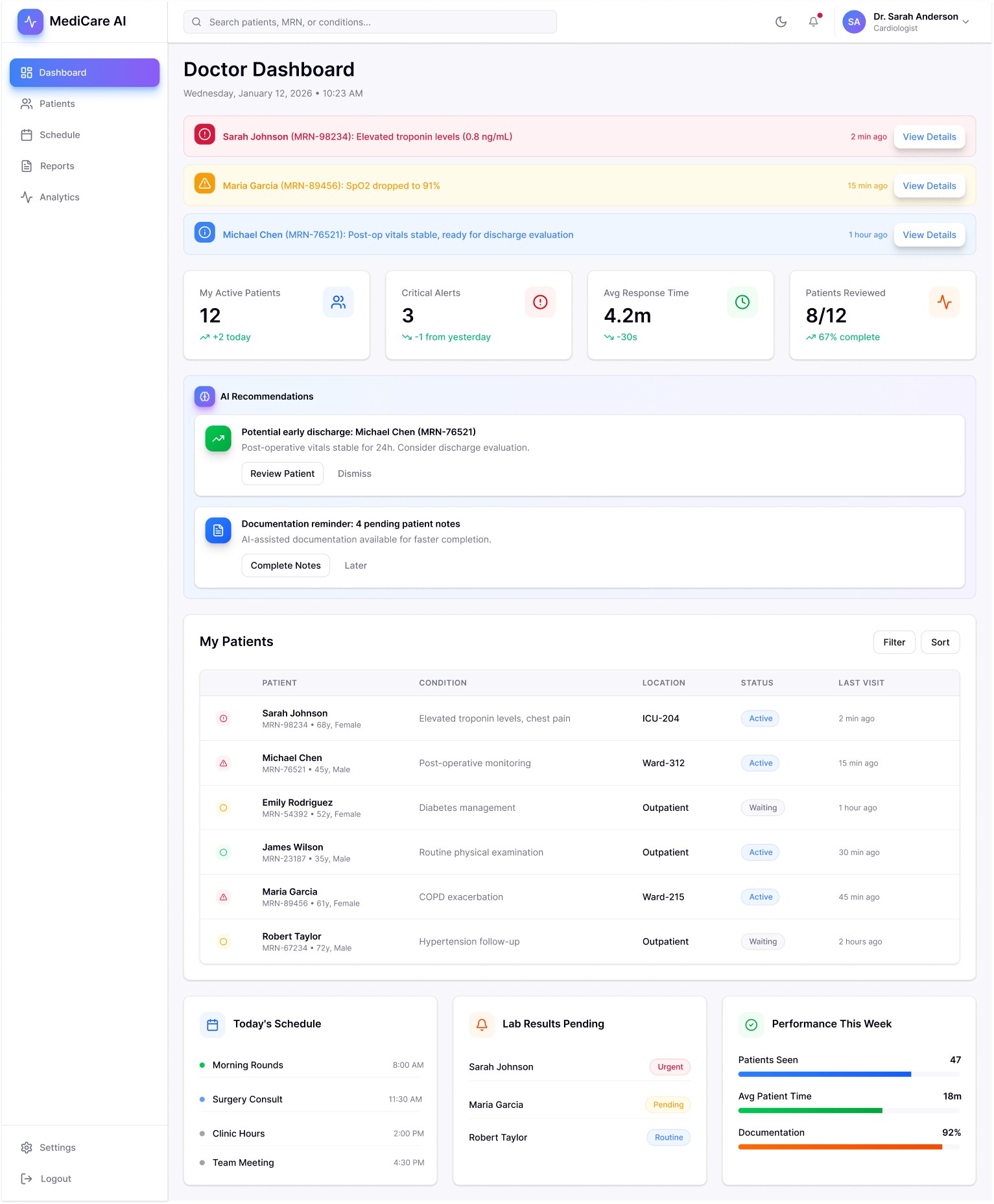
🖥️ AI-Assisted Doctor Dashboard
Overview of the day's patients with AI-prioritized cases based on urgency and complexity
Key Benefits
Clear visual hierarchy reduces cognitive load
No more deciding 'what to look at first'
At-a-glance status of all active patients
UX Rationale
Doctors should never start their day deciding what to look at first the system should intelligently guide their attention.
📝Smart Clinical Documentation
AI-generated draft notes from patient interactions with structured, editable summaries
Key Benefits
Shift from writer to reviewer role
Reduce documentation time by 40%+
Maintain clinical accuracy and compliance
UX Rationale
Documentation should be auto-drafted by AI and reviewed by doctors, not written from scratch every time.
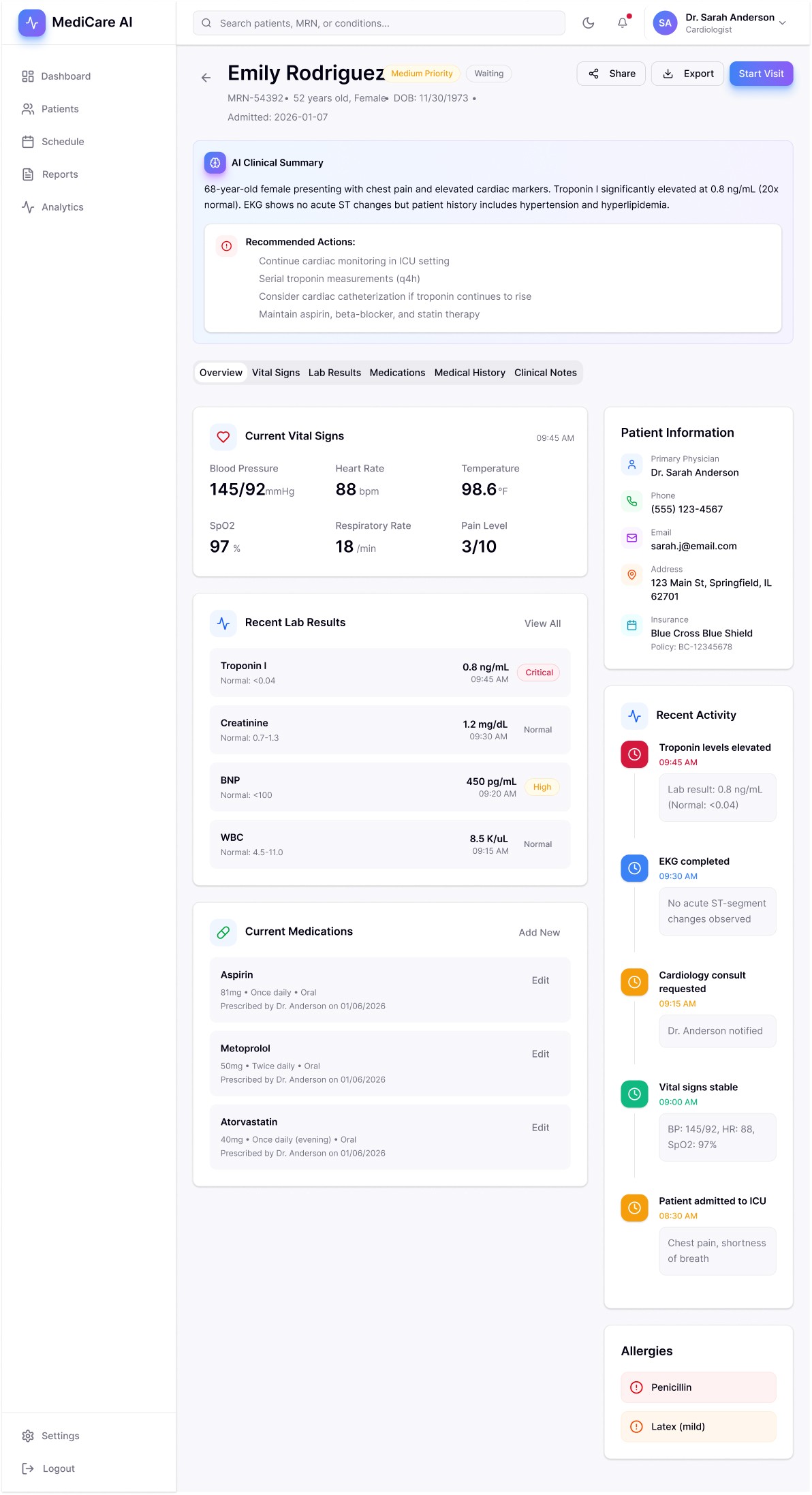
🕐Unified Patient Overview
Auto-generated patient summary with key risks, medications, and recent changes highlighted
Key Benefits
Reduce time-to-understanding from minutes to seconds
Timeline-based view instead of scattered tabs
Critical information surfaced automatically
UX Rationale
Comprehensive patient understanding should take seconds, not minutes of clicking through tabs.
🔔 Intelligent Alert Prioritization
Alerts ranked by urgency and impact with contextual reasoning for each notification
Key Benefits
Reduce alert fatigue
Each alert includes 'why it matters'
Smart filtering of non-urgent notifications
UX Rationale
Not all alerts deserve equal attention the system should rank them by clinical importance and provide context.
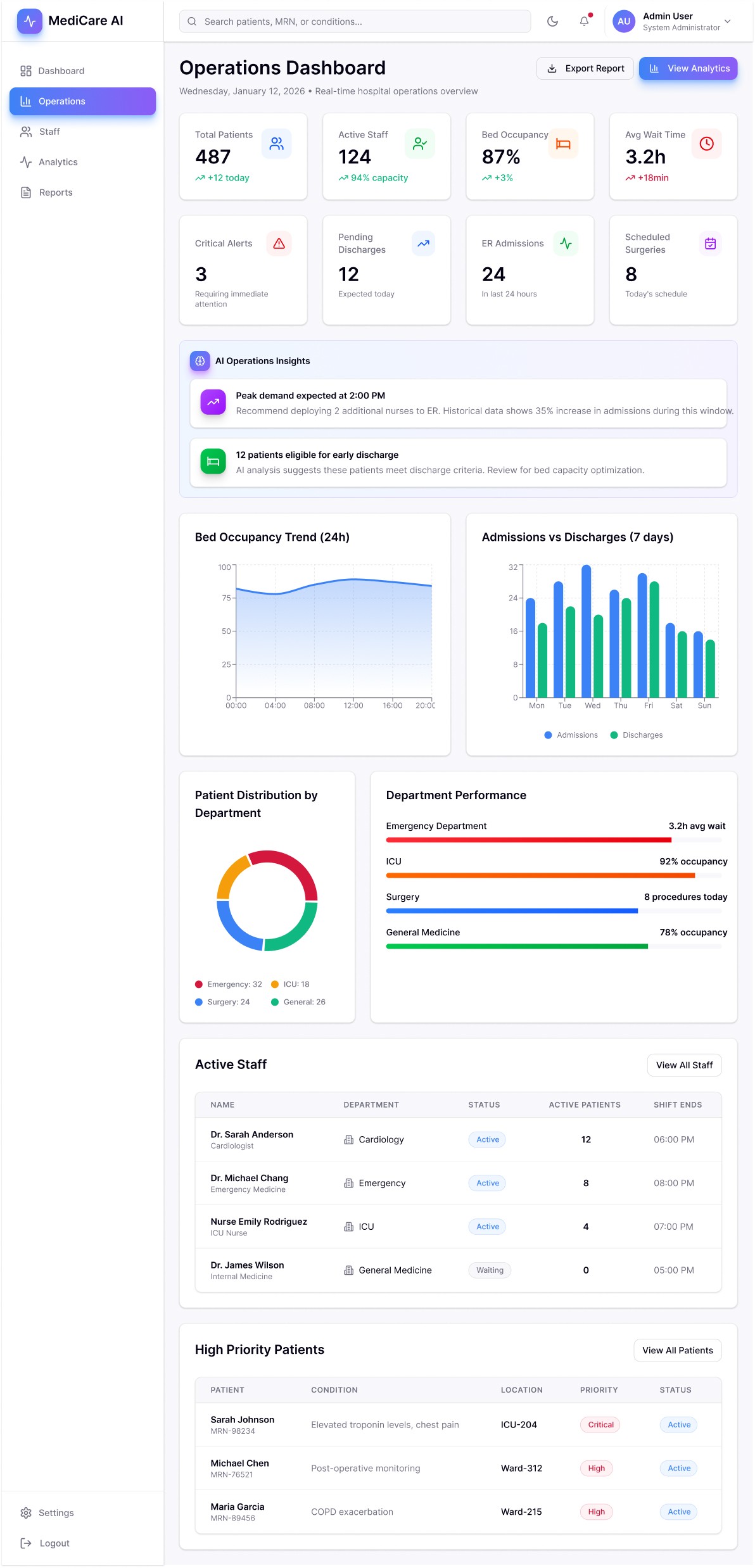
📊Operations & Burnout Dashboard
Admin view with doctor workload overview, burnout risk indicators, and efficiency metrics
Key Benefits
Visibility into staff workload distribution
Early intervention for burnout risks
Data-driven staffing decisions
UX Rationale
Burnout is a system problem, not an individual failure administrators need tools to identify and prevent it.